

Hochschule Niederrhein, Germany
This project helps people with diabetic foot syndrome — a condition where nerve damage reduces pain sensation in the feet. Because patients cannot feel harmful pressure, small wounds can worsen and even lead to amputations. The prototype acts like an artificial pain system, warning patients when too much pressure is applied to their foot.
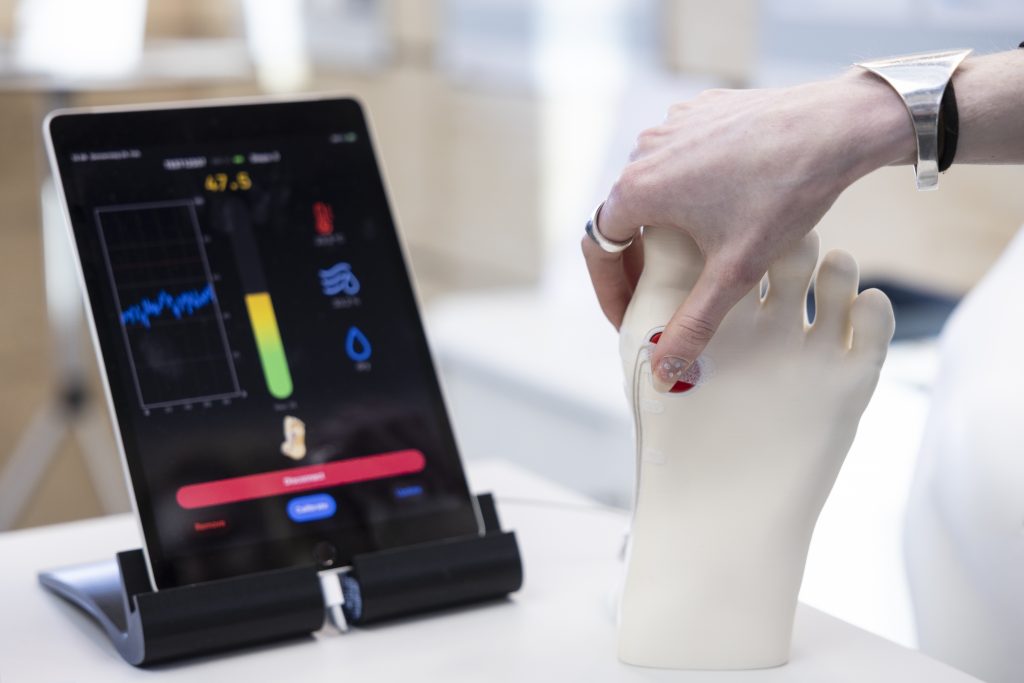
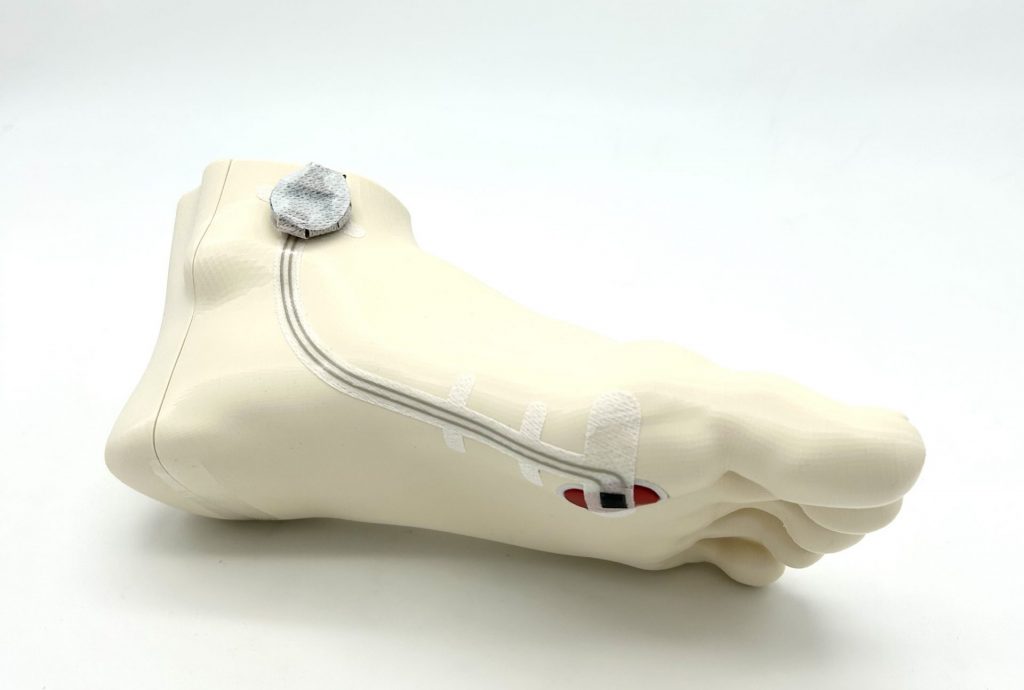
The device combines printed electronics with a hybrid flexible–rigid design for comfort and reliability. A printed flexible pressure sensor detects local pressure, while a compact microcontroller interprets the data and transmits it via Bluetooth Low Energy to an app. The app displays real-time pressure data and alerts the patient through visual or acoustic signals. This integration of flexible sensing, wireless communication, and digital feedback creates an intelligent system for daily diabetic foot monitoring, enabling the patients to stay mobile.
Functionality
The system works by detecting pressure on the foot and instantly translating it into feedback. A flexible pressure sensor, made with printed conductive inks on medical tape, changes its electrical resistance depending on how much force is applied. A microcontroller measures these resistance changes, calculates the pressure, and sends the data via Bluetooth Low Energy to the app.
The app shows the pressure values in real time and alerts the patient when a critical limit is reached. By combining printed flexible sensors with rigid electronic components, the system achieves both comfort and mechanical stability. It runs on very little power, allowing long-term use without frequent charging. In short, pressure on the wound is detected, interpreted, and communicated instantly — recreating the lost pain sensation through smart feedback.
Benefits of the project
The motivation for this project comes from the high risk of foot injuries in diabetic patients who cannot feel pain. Without pain as a warning signal, wounds can go unnoticed and may lead to serious complications or amputations. Current treatment methods reduce pressure but offer no feedback between medical visits and limit the mobility of the patients, leading to the worsening of their overall condition and health.
This demonstrator solves that problem by restoring a technical pain response. It continuously monitors pressure, warns the patient in real time, and helps prevent overloading the wound, while remaining mobile. The combination of printed flexible sensors, rigid low-power electronics, and wireless communication makes the system reliable, comfortable, and easy to use. Its main advantages are early warning, improved wound healing, and the prevention of unnecessary amputations — giving patients more independence and safety in everyday life.
Target industry
- Healthcare
- Internet of Things
- Wearables
Organic & Printed Components
- Conductive path
- Interconnection
- Printed dielectric / insulator
- Printed electrode
- Printed piezo elements
- Printed sensor
Classical Components
- Microcontroller Unit (MCU): BlueNRG-M2SA
- Temperature and Humidity Sensor: BME280 (Bosch)
- Non-Volatile Memory (EEPROM)
- Battery: VARTA CR2032 coin cell (230 mAh)
- Resistors (SMD)
- Capacitors (SMD)
- Connectors / Magnetic Contacts
- Rigid PCB
- Flexible PCB (fPCB)
- iPad (App)