

Form factor: Flexible Printed Electronics (FPE) overcome the geometric limits of traditional circuit boards, allowing circuits to be printed on flexible, stretchable, and three-dimensional surfaces. This lets electronics integrate into curved structures, clothing, or internal spaces that would otherwise go unused.
Defense
The primary application areas include wearables for health and performance monitoring, thermal textiles, smart textiles designed for power and sensing, flexible displays, printed and conformal antennas, smart munitions, and defense drones.
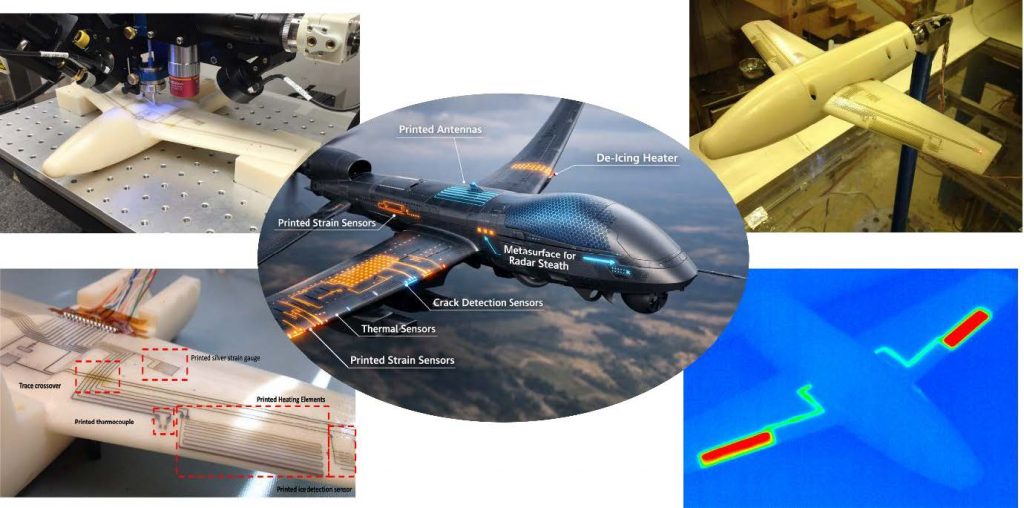
Drones
Printed multifunctional aircraft skin for structural health monitoring
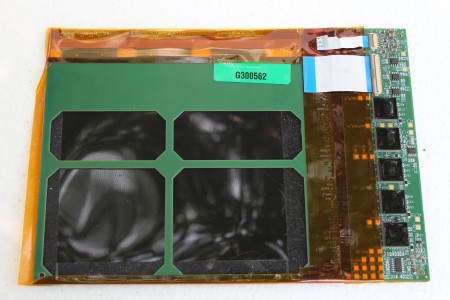
Flexible X-ray Digital Imager
integrated with an advanced electronic circuit board
Aerospace
Space Applications: The space sector sets high demands for flexible and printed electronics (FPE), requiring lightweight, integrated, and sustainable solutions that withstand vacuum, radiation, extreme temperatures, and long-term reliability. New Space initiatives and agile manufacturing offer opportunities for FPE integration in satellites, launchers, and upcoming lunar/Mars infrastructure, enabling compact, customizable multifunctional components.
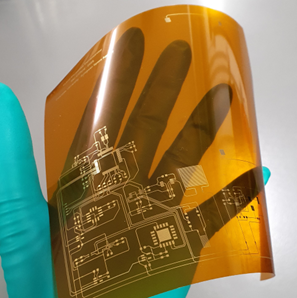
Deployable Planetary Environmental Monitoring
Aerosol jet printed gold circuitry on polyimide for lightweight
Avionics Applications: A modern aircraft contains ~ 100 kilometers of electrical cable, with roughly ~20% embedded in cabin structures, resulting in high mass, large part counts, and time‑intensive manual installation. By replacing conventional wiring harnesses and rigid modules with lightweight printed conductive foils, aircraft manufacturers can significantly streamline production processes while enhancing design flexibility.
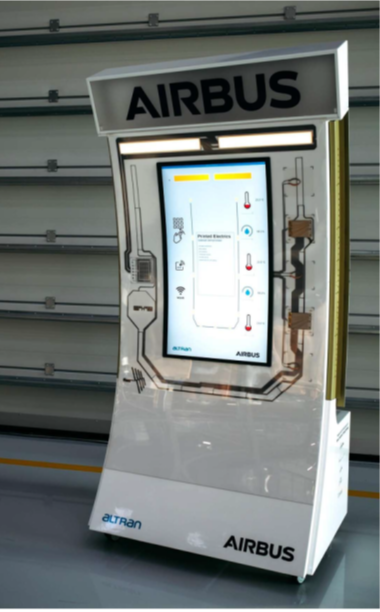
Full Scale Sidewall Demonstrator

Electrochromic Windows
with various levels of dimming effect