

Printed Electronics
Printed electronics enables the production of flexible and large-area components and complements silicon electronics. Ultrathin, lightweight, robust and economical to manufacture: these key features distinguish flexible and printed electronics from traditional semiconductor technologies.
At a glance
Flexible and printed electronics stands for a revolutionary new type of electronics – also called “emerging electronics” – which is thin, lightweight, flexible, robust, and produced at low cost. “Emerging electronics” means electronics beyond the classic silicon approach, including flexible, printed electronics from organic, polymeric or inorganic materials. The flexible and printed electronics technology also enables a wide range of electrical components to be produced and can be directly integrated into low cost reel-to-reel processes. This enables single-use, ubiquitous electronic devices and new applications. Closely related terms to printed electronics are e.g. organic, inorganic, plastic, polymer, flexible, thin-film, or large-area electronics. The majority of these technology areas is covered by OE-A and its members.
Variety of printing processes
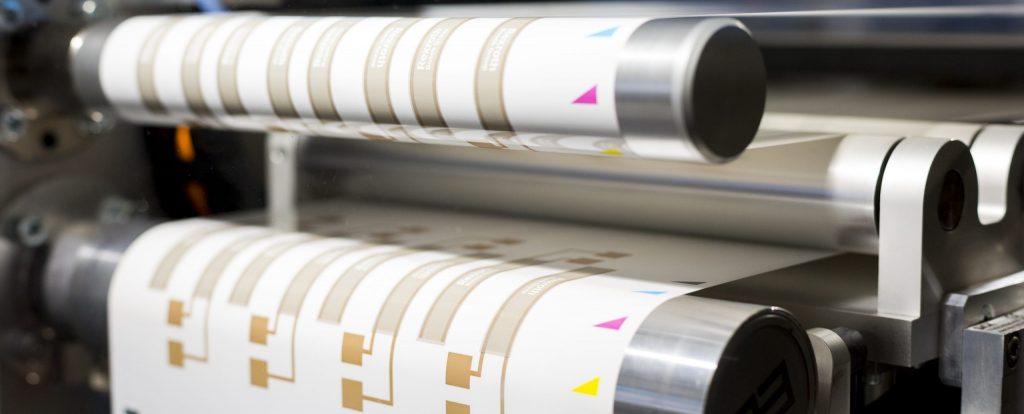
The key elements of printed electronics are conductive, semi-conductive or dielectric inks and pastes. These can be economically printed on large area foils, such as polyester or other plastics, as well as on paper, glass or textiles. It is thereby crucial, that these materials can be processed using printing- and coating techniques.
There is no standard technique for producing printed electronics. Exactly which method is being used depends on the particular application, ink and substrate. The producer needs to consider whether a high resolution, throughput or homogeneity is required. Nearly all types of industrial printing processes are being used, ranging from gravure and flexographic printing, to screen and inkjet printing. However, these techniques need to be modified to allow the printing of electronics. It is furthermore possible to apply known processes from the classical semiconductor manufacturing, such as vapor deposition. The combination of all these types of process technologies with the knowledge from other industry sectors, such as material development and electrical engineering, has enabled the mass production of printed electronics.
Enabling new possibilities
Printed electronics is the key to the manufacturing of a multitude of electronic components. Varying from transistors, circuits and sensors to displays, light sources, solar cells and touch surfaces. This technology opens up new areas of application using a novel approach to manufacturing electronics. Due to its technical and design freedom, printed electronics complements classical electronics. New markets and innovative products are being created, that were first unthinkable.
Industries
Flexible and printed electronics has successfully entered important industry sectors. From consumer electronics, internet of things and healthcare to automotive, smart packaging and buildings: Printed electronics is now globally being applied in numerous products and industries. The focus industries OE-A is looking into, which are also represented in the OE-A Roadmap, can be found below.

Automotive
A key trend in the automotive industry is the tendency for motor vehicles to become “smarter” and to have more and more information interfaces with the driver or passenger, all while being lightweight and taking up very little installation space.
read more
As more operating functions, including eventually driving itself, are carried out by on-board computers, the driver/passenger will have even more interaction with information and entertainment systems in the car. The trend is for these interfaces to be integrated into the car interior, which has led to flexible and conformable touch sensors and displays, enabled by OPE to be used in modern cars. Among current applications, seat occupation detectors that enable the detection and classification of vehicle occupants for important safety functions are the most inconspicuous parts facilitated by printed electronics. OLED technology is already implemented commercially in cars, both for interior displays and for taillights. A key selling point for OLED in this case is the freedom of design, which is not feasible with any other light source. Furthermore, the transition to electric vehicles requires new heating concepts for the automotive interior where printed heating foils are that can be integrated directly beneath the surface represent an ideal solution.
Application Examples
Flexible and printed electronics has successfully entered important industry sectors. From consumer electronics, internet of things and healthcare to automotive, smart packaging and buildings: Printed electronics is now globally being applied in numerous products and industries. The focus industries OE-A is looking into, which are also represented in the OE-A Roadmap, can be found below.

Smart Surface HMI
Curved, backlit touch control sensor

OLED Rear Lights
High-density digital OLED rear lights for dynamic signaling

Seat Occupancy Sensor

Consumer electronics
Consumer electronics is currently one of the largest industries in which printed electronics is being applied. In this case, consumer electronics refers to both information and entertainment devices such as phones, computers, tablets, TVs and stereos, and to white goods such as refrigerators and washing machines.
read more
Most device chapters of this roadmap are relevant to the four primary consumer segments discussed in this chapter: wearables, mobile devices, smart home, and entertainment and gaming. Wearables are the fastest growing market, mobile devices show mature commercialization in premium segments, smart home applications benefit from regulatory drivers, and entertainment/gaming segments exhibit initial but high-potential adoption.
Application Examples

Indoor OPV Remote Control
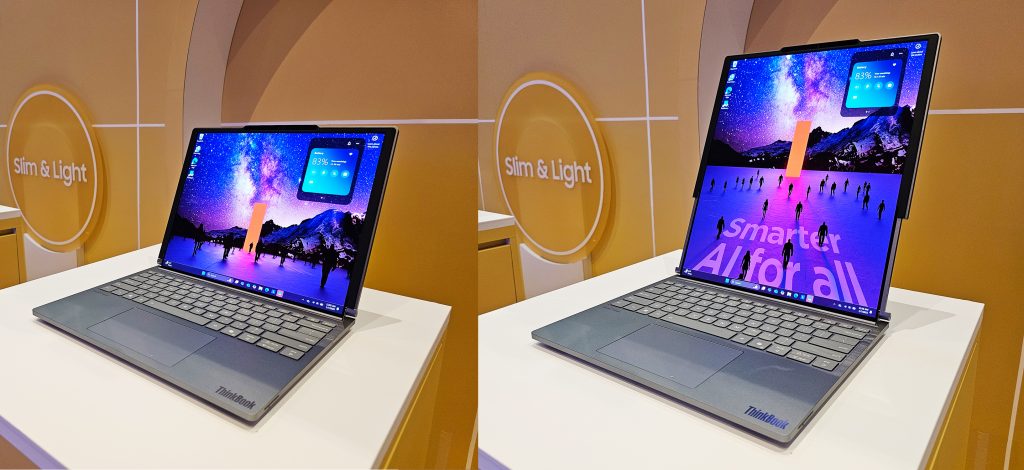
QD-OLED-Rollable-ThinkBook
Healthcare & Wellbeing
The industry associated with healthcare and wellbeing (not just pharmaceuticals) has grown tremendously in recent years, both due to technological advances and to an aging society in many countries. Flexible and printed electronics plays an increasingly important role in this industry.
read more
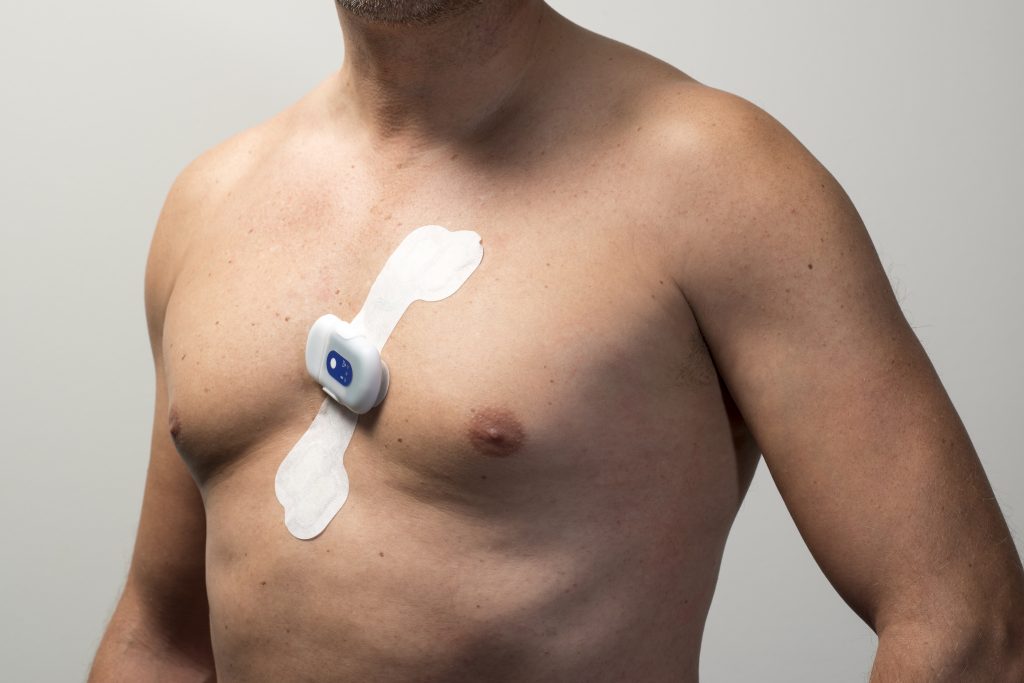
Such products as smart blister packages for pharmaceuticals to monitor dosage compliance, pressure sensors in shoes, glucose monitors and simple ECG patches are already in the market and a flexible, textile integrated antenna for magnetic resonance imaging was also recently introduced. More detailed wireless ECG monitoring has already been demonstrated to be reliable in clinical tests and the commercialization of other body and environmental measurement sensors is expected soon. Light therapy masks based on OLEDs will enter the market in the near future and (in an overlap with consumer electronics) flexible displays are enhancing the functionality of smart watches as well as other body function trackers, and enabling other wearable displays for health, sports and wellbeing purposes. Advanced prototypes of skin-mounted health monitoring such as OLED/OPD enabled flexible blood oximetry, printed batteries for disposable low-power lab-on-a-chip systems, and wireless have been demonstrated and commercialization is expected soon. Printed diagnostic sensors are already commercial, and new one-way integrated diagnostic systems are being further developed. Certain developments are initially commercialized for sports and recreation applications, where regulatory pressure is less strict and danger from possible failure is smaller.
Application Examples
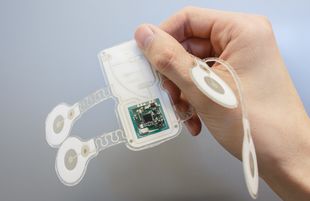
Waerable Health Patch
Health patch for vital signs monitoring

OLED Therapy Mask
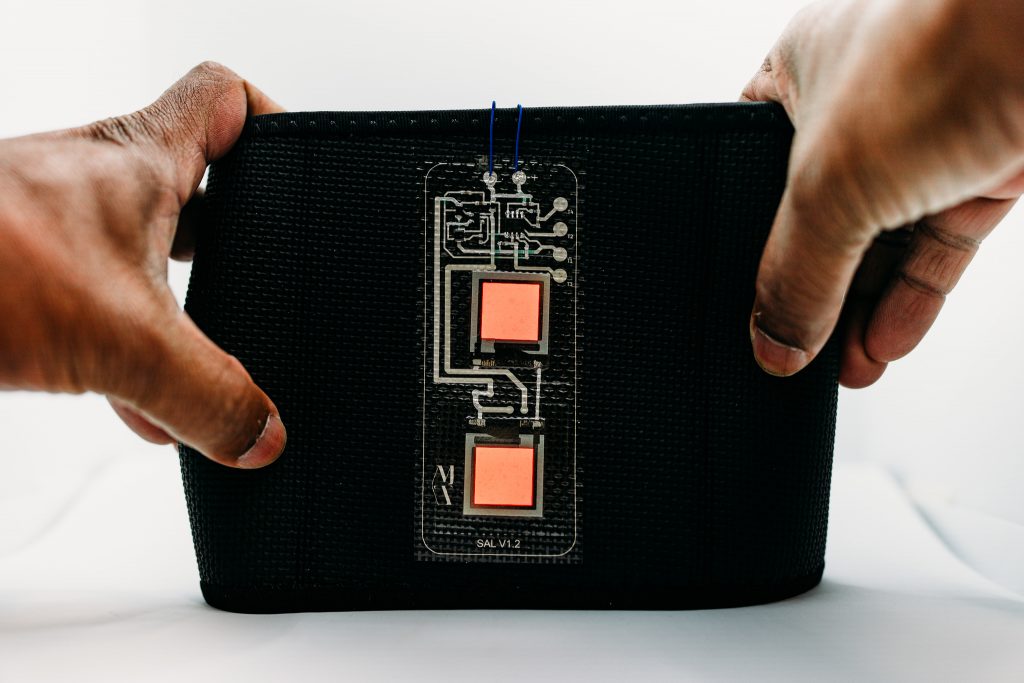
Wearable light therapy for muscle recovery

Internet of Things
The Internet of Things (IoT) is a broad term describing the increasing integration of intelligence and wireless connectivity into objects that previously did not have such functionality, such as machines, (sometimes referred to as “Industry 4.0”), automobiles, appliances, but also everyday objects with embedded sensors, processors and displays, sometimes being referred to as the “Internet of Everything” (IoE).
read more
Intelligence has already found its way into consumer white goods with embedded sensors, touch screens and displays. Flexible sensors, temperature loggers and smart objects that communicate using Near Field Communication (NFC) or RFID (Radio-Frequency Identification) protocols are now being used commercially, for example in the retail sector, and brand protection. Integration of sensors into buildings utilizing RFID technology is also a growing business. A key issue for IoT is the supply of energy, since hard-wiring and batteries are not sufficient options. Energy harvesting modules based on OPV or other solar cells, piezoelectric materials, or harvesting of radio waves are now available commercially, and the importance of thin-film batteries and especially supercapacitors in combination with these harvester systems is becoming increasingly apparent.
Application Examples

Enhanced Interaction
Near-field communication enables the direct interaction with producers, authentication and access to further information.
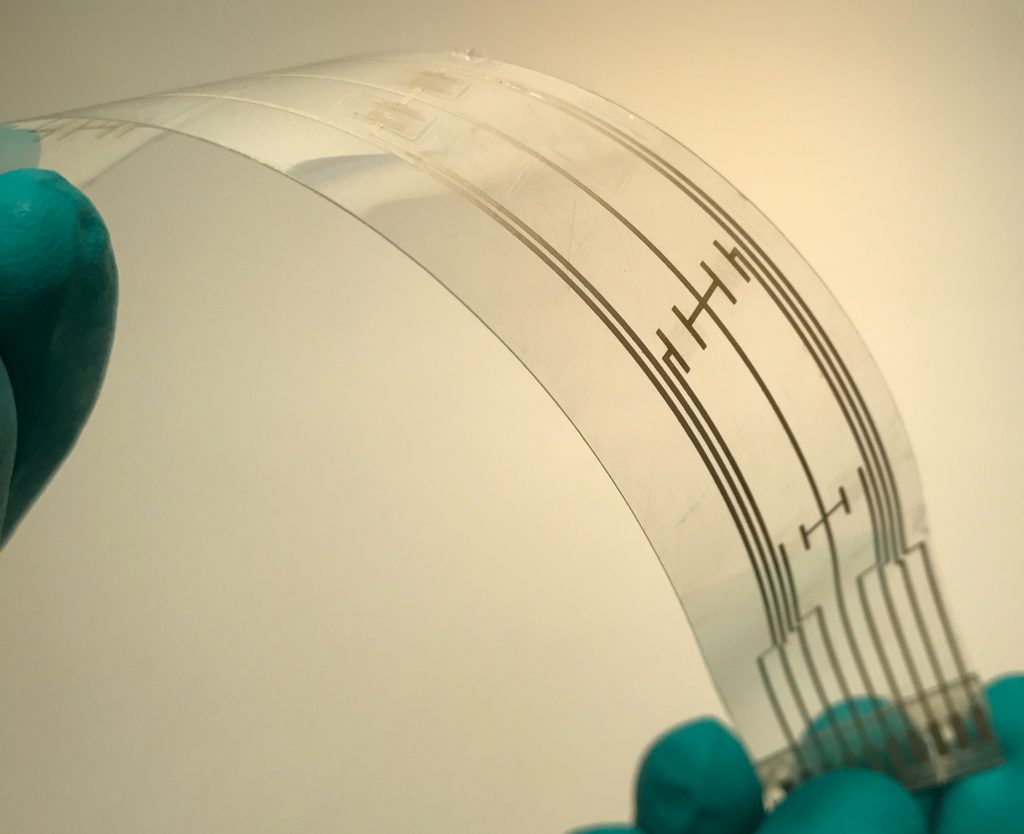
Flexible Sensors
Printed Electronics enable the Internet of Things, e.g. by providing low-cost, flexible temperature sensors for smart home applications.

Harvesting Energy
Organic and Printed Electronics enable the local generation of electricity, by using various power sources, e.g. ambient light, to provide ubiquitous low-power sensors with energy.

Printing & Packaging
The printing and packaging industry is being transformed as packaging becomes more than just an object to hold and printing becomes increasingly functional.
read more
Global product shipments are expected to reach 225 billion by 2028. This raises enormous challenges for sustainability (product traceability, reduction of waste, circular economy, recyclability) and customer safety. Authenticity and brand value protection continue to be a drive for brands to invest in smarter packaging. Active smart packaging will actively protect the goods by modifying and monitoring (including temperature, humidity, mechanical stress).
Application Examples
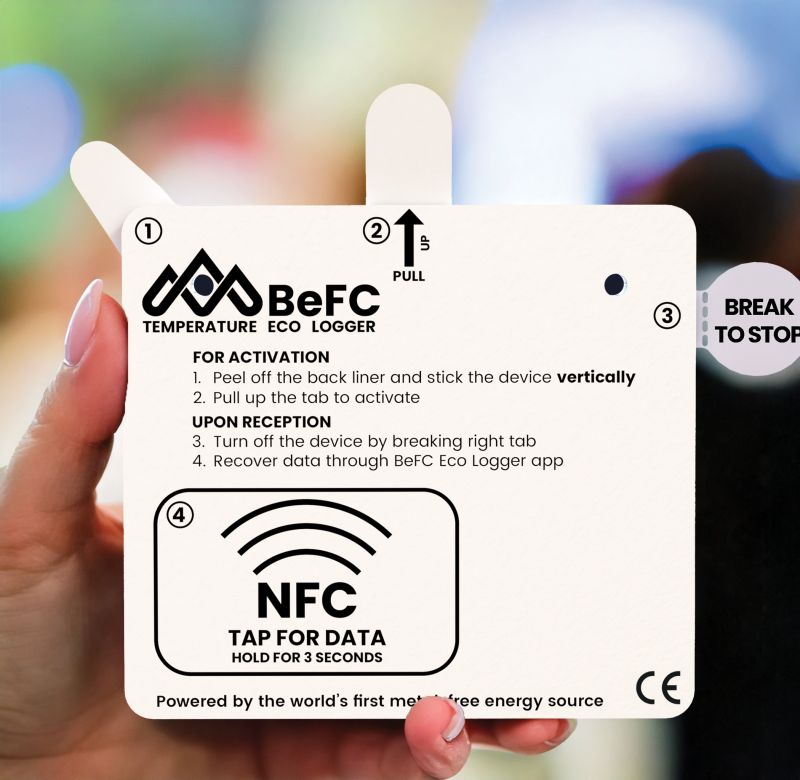
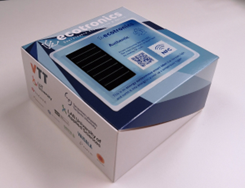
Eco Logger
A single-use, sustainable temperature monitoring device with NFC data access.
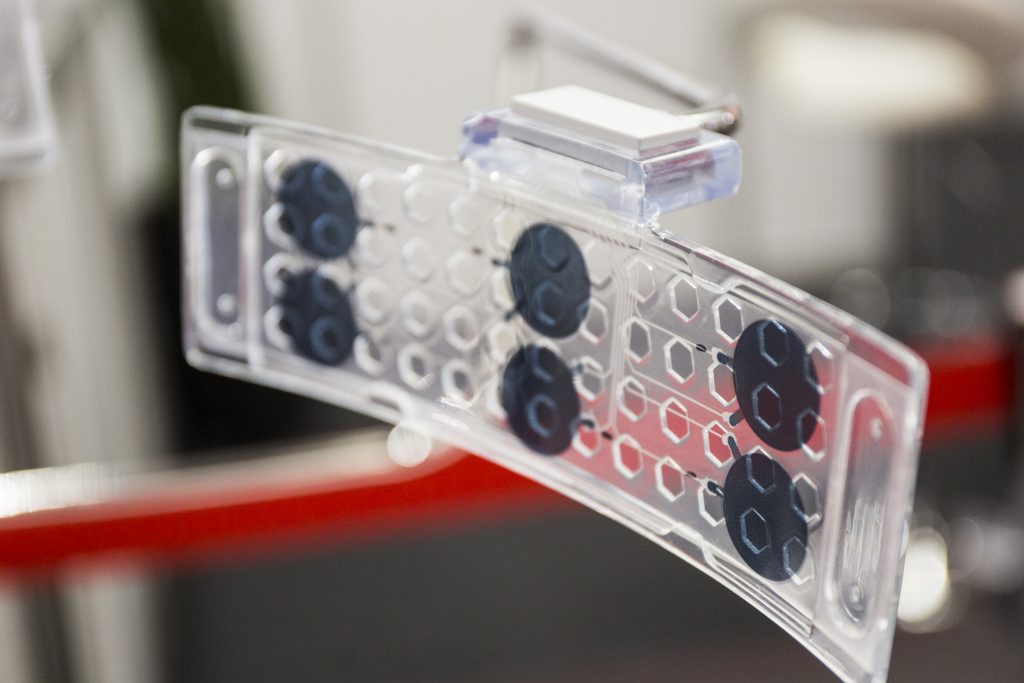
Printed Loudspeaker
By printing piezo active material on a substrate, very thin loudspeakers can be fabricated. These can be integrated into all kinds of devices, e.g. to create a talking book.

Illuminated Paper
Printed electroluminescent lighting enhances the visibility of products, while keeping the packaging flexible.
Smart Buildings
The construction industry is being transformed by the trend of smart buildings. Sensors embedded in construction materials for monitoring both during and after construction can measure and control material quality, energy usage anda range of other important factors for wellbeing such as humidity, mold or gases.
read more
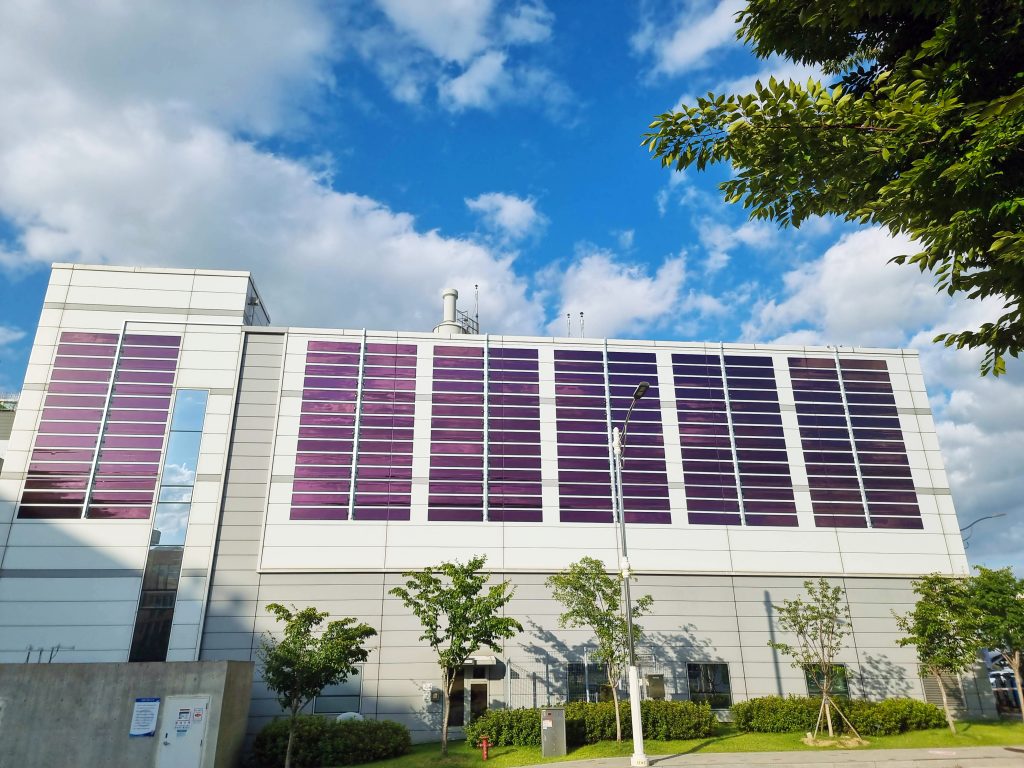
Companies are commercializing such RFID-equipped sensors and are looking to improve the range of sensing as well as the effectiveness of systems by incorporating energy harvesting / storage and novel sensors based on printed electronics. This technology is also starting to enable active energy management through the integration of OPV into roofs and facades and the development of smart windows. In addition, printed electronics is beginning to transform building design; OLED lighting is being increasingly used for decorative, architectural and functional lighting, due to its freedom of shape and conformity to complex shapes. Furthermore, both flat and flexible or conformable electrophoretic, OLCD and OLED displays are integrated seamlessly into building interiors for signage and decoration.
Application Examples
Organic Photovoltaic Foils
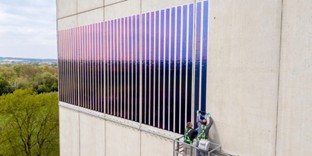
Flexible photovoltaic modules produced in roll-to-roll processes enable the easy integration of lightweight power-supply in objects with any shape.

Flexible Printed Organic Photovoltaics
with leather texture for indoor energy harvesting

Intuitive Interaction
Human-Machine interfaces can be integrated into flat surfaces to allow touch-control interaction, displaying of information with energy-efficient OLED technology and functional integration of all kinds of sensors.
Applications
The number of possible application areas of printed electronics is increasing: Due to continuous development, the individual components become more efficient. The areas of application are therefore complex and not easy to be summarized. Some important elements of printed electronics are explained in more detail below.
OLED & Flexible Displays
Organic light emitting diodes (OLEDs) are full area and homogenous light, that can be flexible, based on the production process.
read more
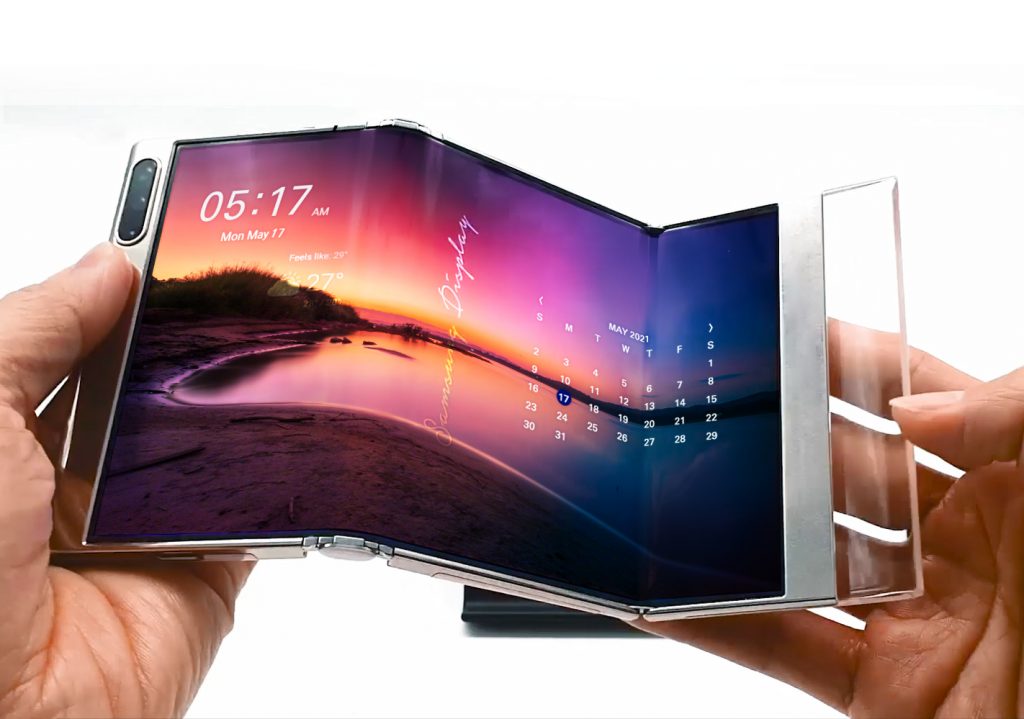
The ability to deposit OLEDs on flexible substrates has also led to revolutionary changes in device form factor, with foldable and rollable displays gaining market share, particularly for smart phones and IT products. The flexibility of OLEDs enables the design of devices that can unfold or unroll to reveal larger displays, with bi-fold and even tri-fold products now commercially available.
Implementation examples

Tri-folding AMOLED Smartphone

Hardware Wallet
Featuring a curved LCD driven by an OTFT display backplane

Screen Printed Electrochromic Displays
Thin, flexible, energy and cost-efficient
OPV
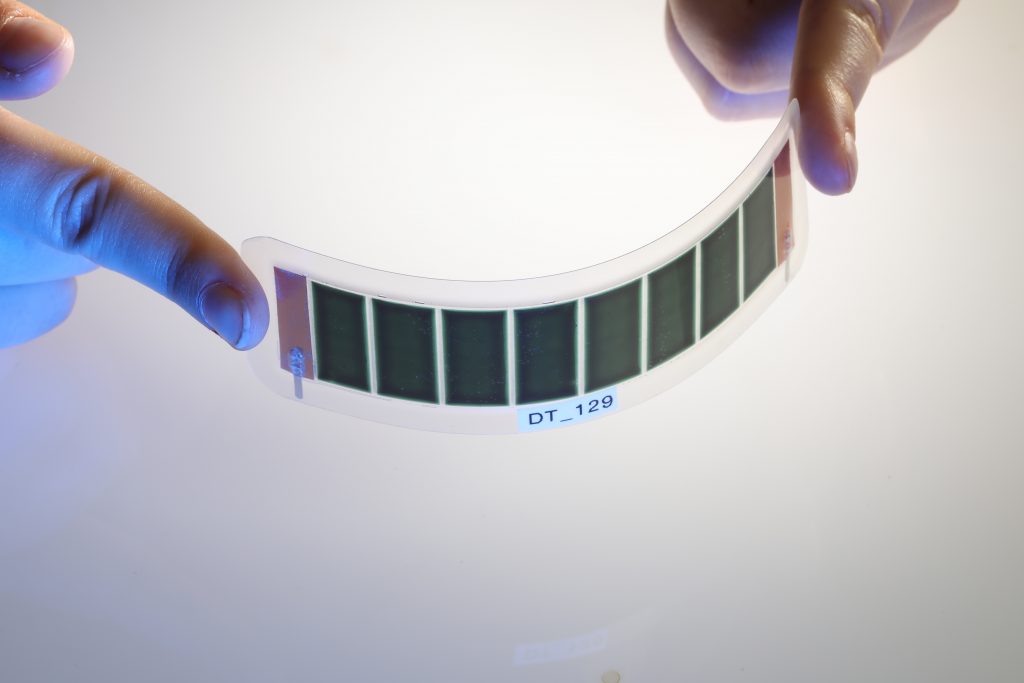
Thanks to their lightweight, flexible, and potentially low-cost nature, OPV devices can be seamlessly integrated into a wide range of surfaces, from building facades and windows to portable and wearable devices.
read more
Perovskite solar cells (PSC) have revolutionized the prospects of next-generation PVs, with an unprecedented pace of development. Over the past years, they have attracted tremendous interest from the scientific community due to their skyrocketing light-to-electric power conversion efficiencies (PCE). In just sixteen years of PSC research, PSC efficiencies have risen from 3.8% to 27%, nearly matching the maximum efficiency attained by Si heterostructure-based cells (27.8%) However, these record efficiencies were obtained on small laboratory-scale devices (active areas below 1 cm2).
Implementation examples
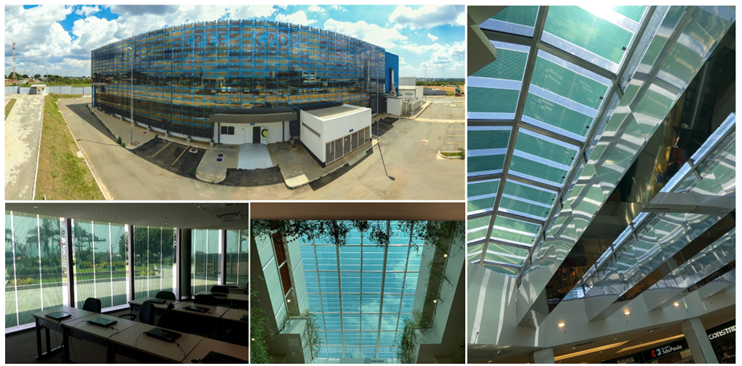
OPV Architectural Integration
glass-glass façade installation, façade integration on an office building, and skylight installations in a shopping mall
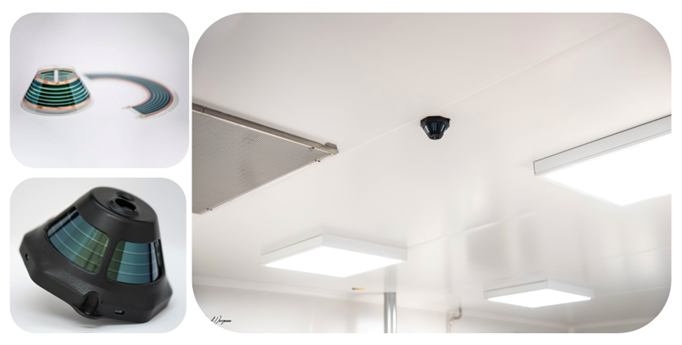
Smart Building PIR Sensor
OPV module printed as a flat circular sheet and assembled into a cone, integrated into a 360° smart building PIR sensor, and installed on a living-space rooftop where full light exposure maximizes performance under all lighting conditions
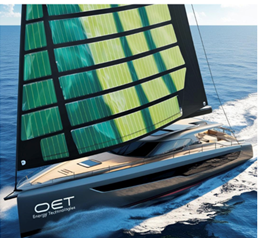
OPV Panels Embedded in a Sail
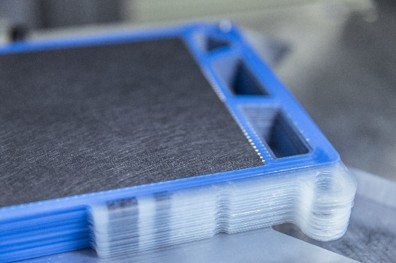
Fuel Cells
Fuel cell technology is a promising candidate for local storage and power generation. Indeed, it allows to store energy in the form of H2 form and to locally generate electricity. Proton Exchange Membrane Fuel Cell, which is the fuel cell technology that dominates the market today.
read more
Two main application areas of the Proton Exchange Fuel Cell Membrane (PEMFC) is Mobility and Stationary (energy supply for industry, data centers, events and outdoor operations, hospitals).
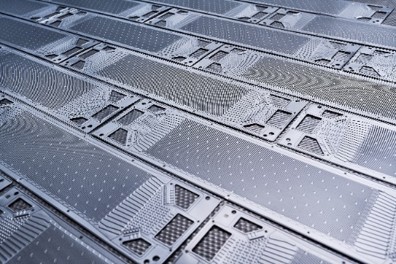
Bipolar Plate
MEA
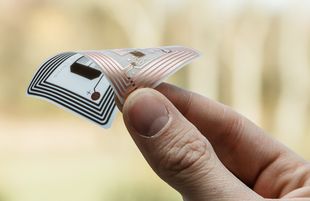
NFC & RFID
Nearfield communication (NFC) and radio frequency identification (RFID) are transmission standards for contactless data transmission using electromagnetic induction.
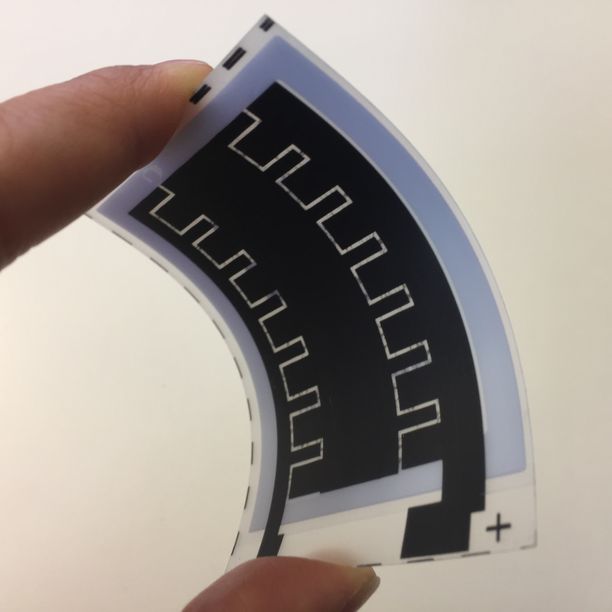
Flexible Battery & Printed Supercapacitor
The Internet of Things and associated electronic applications (e.g. wearables, remote smart sensing…) has continued to grow, based on ubiquitous smart objects, where the electronic functionality must blend in and mobility is of high importance. In such applications, power supply remains a key issue.
read more
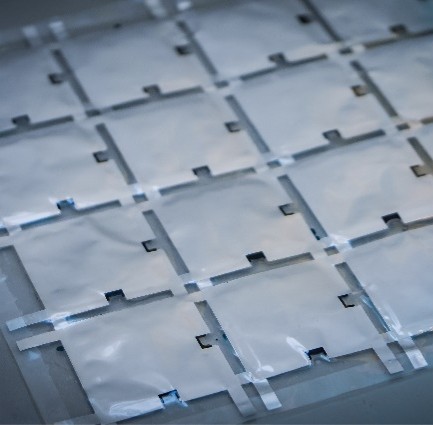
Batteries and supercapacitors are essential system components for these applications, either as a primary source of energy or interim source in case of self-powered devices.
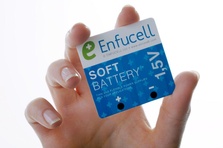
Printed Primary Battery
Printed Supercapacitor
Energy Autonomous Temperature Logger
Hybrid Systems
Hybrid printed electronics combines printed functionality with conventional electronic components with the aim to use the best of both worlds: Large area flexibility of printed electronics and high-performance of conventional electronics.
read more
The OE-A Working Group Hybrid Systems aims to bring together companies, research centers and universities that deal with combination of traditional silicon electronics with printed electronics. This group furthermore works on identifying best practices and competencies, as well as future concepts.
OE-A Hybrid Systems
The combination of printed and classical silicon electronics needs a lot of exchange and interaction between the individual experts from the respective fields. For this purpose, the Working Group Hybrid Systems provides a networking platform where current technologies and solutions are discussed, and development partners can be found. Because future topics are identified interactively, the results of the regular meetings are also fed into the OE-A Roadmap for Organic and Printed Electronics, to support and update it with the most recent advances. The Working Group Hybrid Systems, thus, helps to bridge the gap between functional printing of electronics on flexible substrates and silicon semiconductors on rigid PCBs.
Hybrid Systems Explained
Hybrid systems combine printed and silicon-based components. This is where the best of both worlds is achieved: The high processing power of silicon electronics with the flexible, thin, and lightweight characteristics of organic and printed electronics, enabling a broad range of new applications, such as functionalized films for Film Insert Molding (FIM).
Contact
You are interested in the OE-A Working Group Roadmap? Please contact:

Raswanth Sendhil Sasikala
Project Manager
Raswanth Sendhil Sasikala
Project Manager
Roadmap, Hybrid Systems, Fuel Cells
Encapsulation, Sustainability