

TNO, Holst Centre, Netherlands
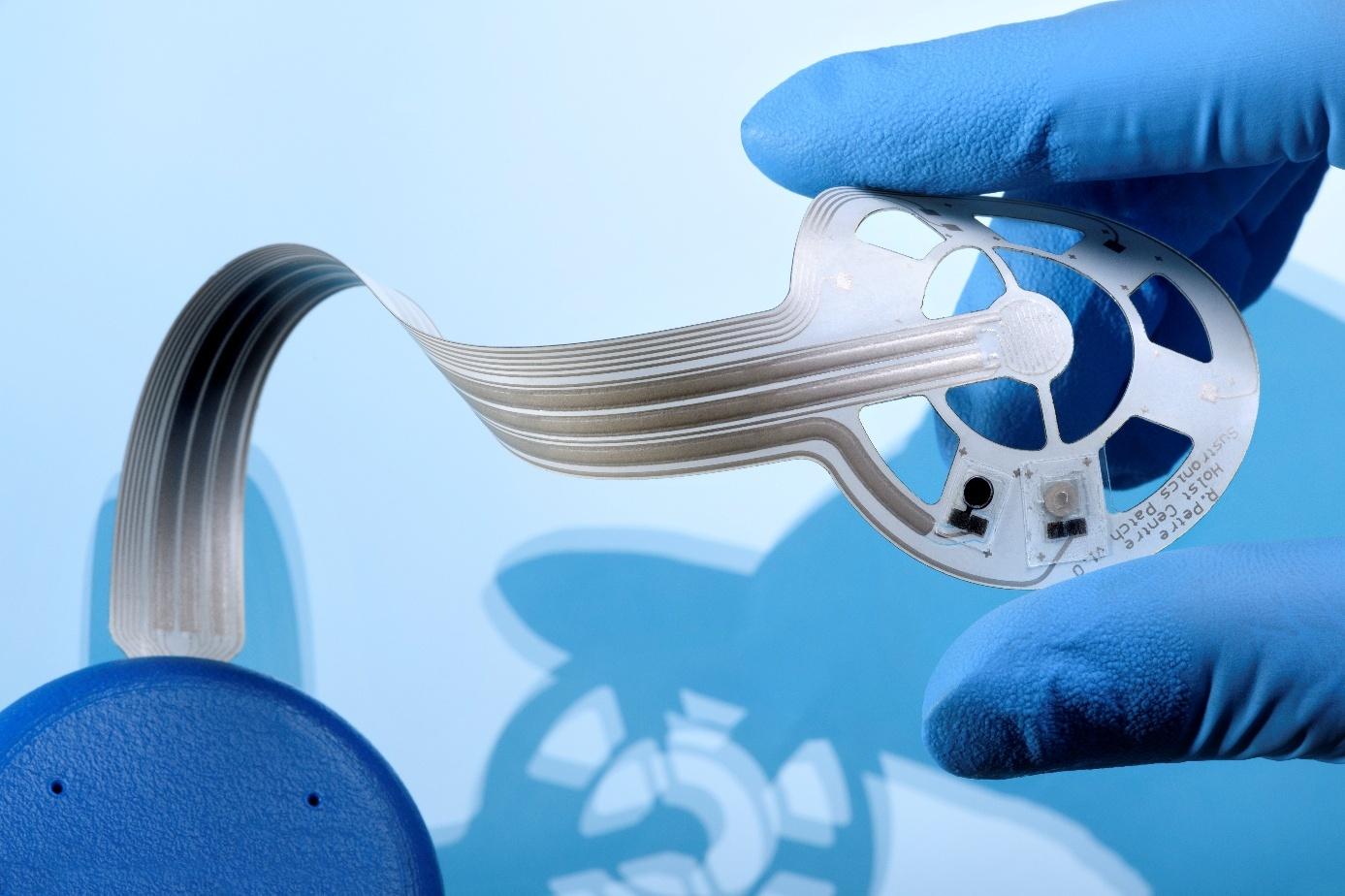
TNO and Holst propose a flexible electronic research platform design for evaluating chemical sensors with built-in sustainability assessment. Sensors in this concept were in relation to wound management.
The design features multiple contact pads for interchangeable sensors, focusing on pH with integrated temperature and printed humidity sensors as supporting modalities within this initial generation. The cut-outs were present for improved fluid flow when integrated within wound dressing material.
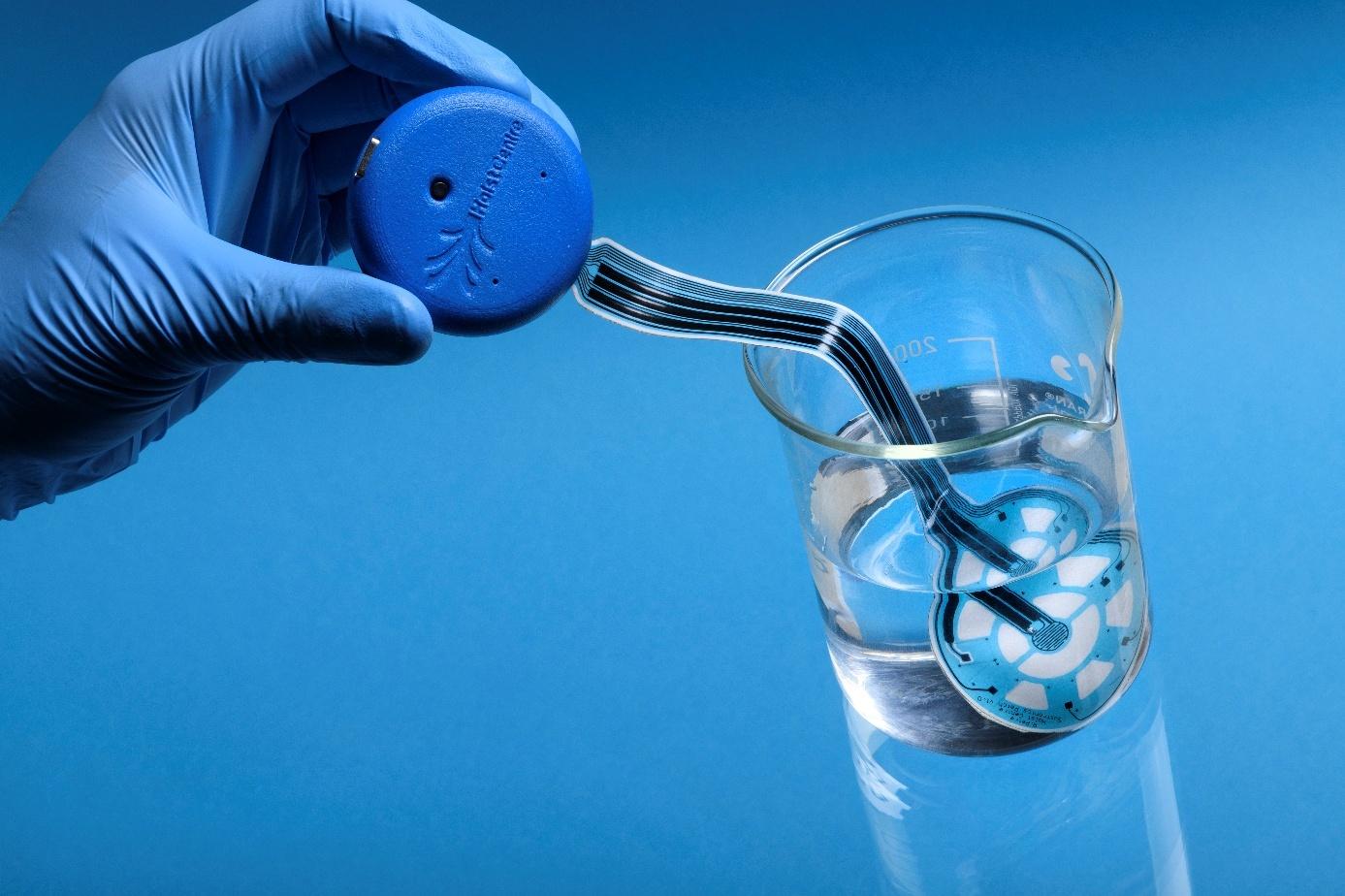
A multi-layer print enables realistic testing of shielding needs for medical use, while encapsulation addresses water ingress and durability.
The stack incorporates sustainable options, such as carbon inks and paper substrates, alongside conventional silver and TPU, allowing performance and life-cycle impacts to be compared.
This platform supports rapid iteration of sensing chemistries and materials while generating critical data on accuracy, stability, and environmental footprint for smart wound care and possibilities for scalable solutions.
Functionality
The demonstrator is a flexible electronic test patch built from thin printed layers that can host multiple types of sensors.
For pH sensing, adhesive electrodes coated with sensitive membranes detect small chemical changes when exposed to wound fluid, producing an electrical signal that can be measured.
A temperature sensor is printed as a thin, conductive track that changes resistance with heat, while a humidity sensor uses interlocking printed patterns that shift their electrical properties as moisture levels rise.
All sensors connect through exposed contact pads, making it easy to link them to external readout electronics. These read-out electronics provide an initial base for the possibilities in miniaturization of hybrid printed electronic systems and how it fits with patient experience.
Protective encapsulation prevents water damage and ensures durability, while the use of flexible, skin-friendly materials allows the patch to mimic how such sensors would behave inside a wound dressing.
When tested with more complex artificial exudates in laboratory phantom models, the platform becomes a tool to study challenges of fluid flow, sensor performance over time, and how well the sensors integrate into real dressing environments.
Benefits of the Project
This platform offers several important benefits.
- It provides a realistic and flexible testbed to evaluate new chemical sensing concepts before moving into costly clinical prototypes, helping researchers rapidly identify what works and what fails.
- By combining pH, temperature, and humidity sensors in a single multi-layer format, it allows testing of both individual modalities and multi-sensor integration.
- The inclusion of artificial exudates and phantom models makes it possible to simulate complex wound environments, generating more reliable performance data.
- Beyond sensing, the platform enables direct comparison of sustainable vs. conventional materials, such as carbon inks and paper substrates versus silver and TPU, thereby linking functionality with environmental footprint.
Overall, it accelerates innovation, reduces risk, and supports the creation of smarter, more sustainable wound care technologies.

Target Industry
- The primary target industry for this platform is the advanced wound care sector, including companies developing dressings, smart bandages, and infection-monitoring technologies.
- It also addresses the wider medical wearables industry, where integrating chemical and physiological sensing into flexible formats is becoming increasingly important for chronic disease management and personalized healthcare.
- In addition, the platform is highly relevant for the printed and flexible electronics industry, providing a practical route to demonstrate how novel substrates, inks, and sustainable materials can perform in demanding medical applications.
- Finally, it offers value to academic and clinical research groups exploring infection, healing, and patient compliance, by bridging laboratory concepts with application-ready demonstrators.
Organic & Printed Components
- Conductive path
- Interconnection
- Printed dielectric / insulator
- Printed electrode
- Printed sensor
Classical Components
- Printed electronic tracks
- Printed dielectric
- Printed sensors
- Interconnects for electronic components
- Electronic components for sensing
- Flexible substrate
- Encapsulant material
- Read-out electronic unit