

CEA Liten, France
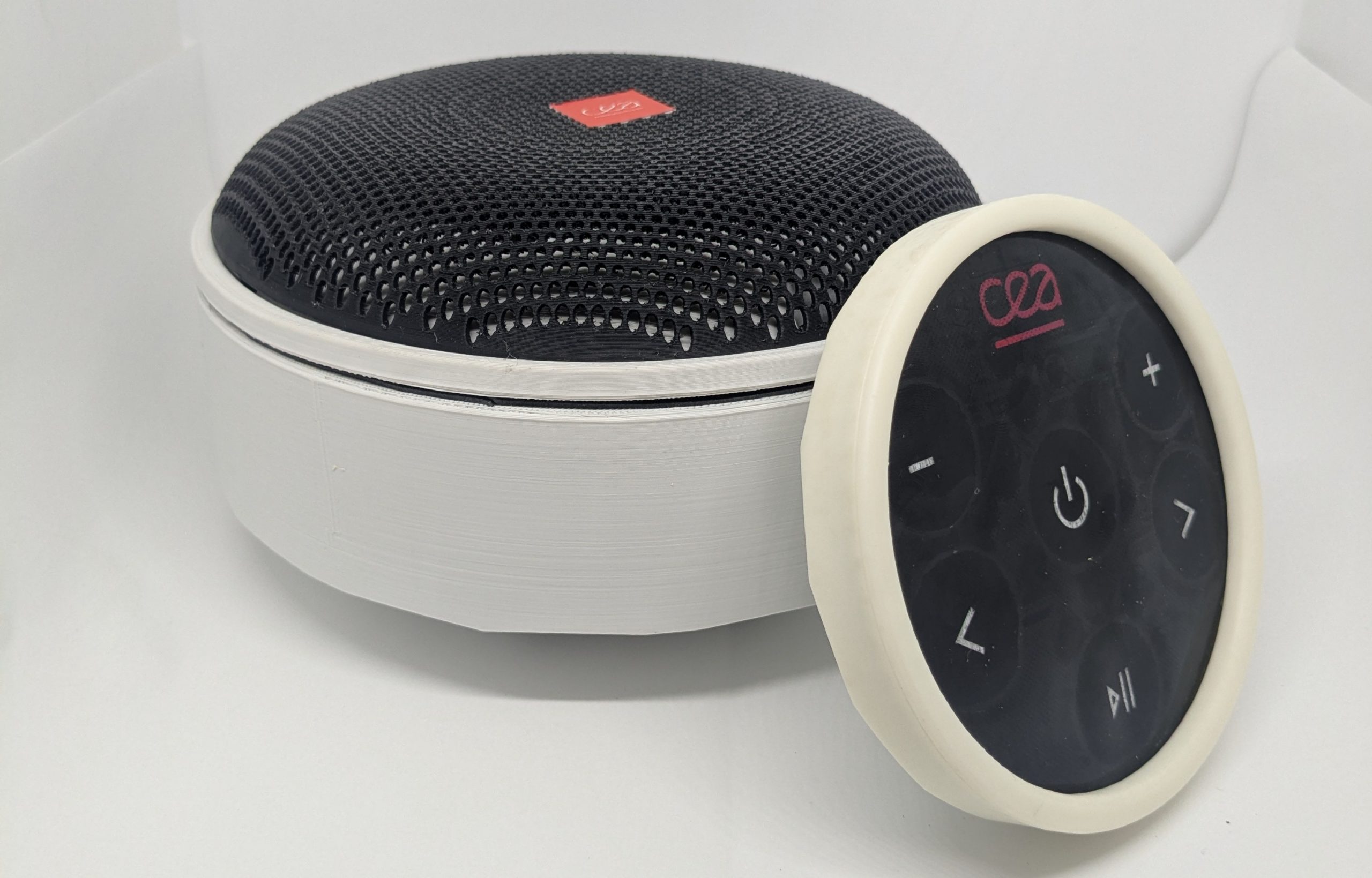
This demonstrator shows that printed electronics combined withthermoforming can integrate complex functionalities through thehybridization of a polycarbonate substrate with conventionalcomponents, and this technique is easier to manufacture than in-mold electronics or traditional PCB devices.
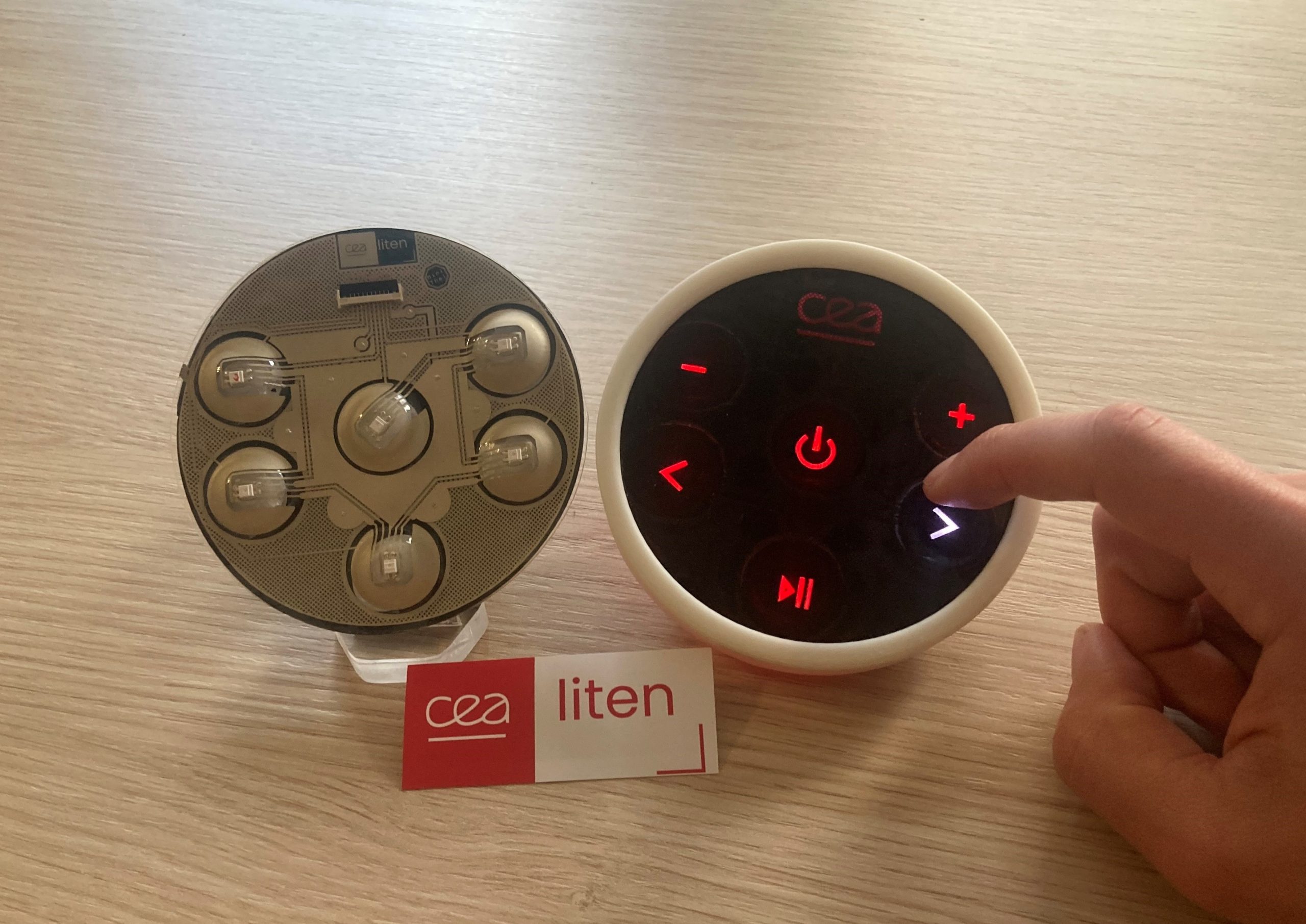
This demonstrator does not use a conventional PCB to drive thedifferent functions (i.e., capacitive buttons and backlighting). It uses athermoformed film that enables the creation of cavities for LED lightdiffusion. Compared to the IME (In-Mold Electronics) technique,thermoforming avoids the constraints associated with resin injection.
The design of this product is very simple and promotes dismantlingcapabilities and reparability.
Functionality
This demonstrator is a fully printed remote control unit thatoffers the same functionalities as a conventionalunit, with significantly reduced costs andenvironmental impact.
It includes :
- Finger detection
- Lighting
- RF communication with the loudspeaker
Benefits of the Project
Technical
- Enhanced design freedom and reduced part count
- Streamlined processing eliminating the need for injection molding and preventing mechanicalfailures of SMD components and ink degradation.
Economic and Environmental:
- Low-environmental-impact and cost-effective manufacturing techniques, such as screenprinting.
- Simplified process eliminating the need for an injection step.
- Reduced resource usage, including materials, energy, and water.
- Easy to dismantle, enhancing reparability and recycling.
Target Industry
- Consumer Electronics
- Automotive
- Internet of Things
Organic & Printed Components
- Conductive path
- Interconnection
- Printed capacitive switch
- Printed dielectric / insulator
- Printed electrode
Classical Components
- LEDs
- LDO
- Microcontroller
- Passive elements